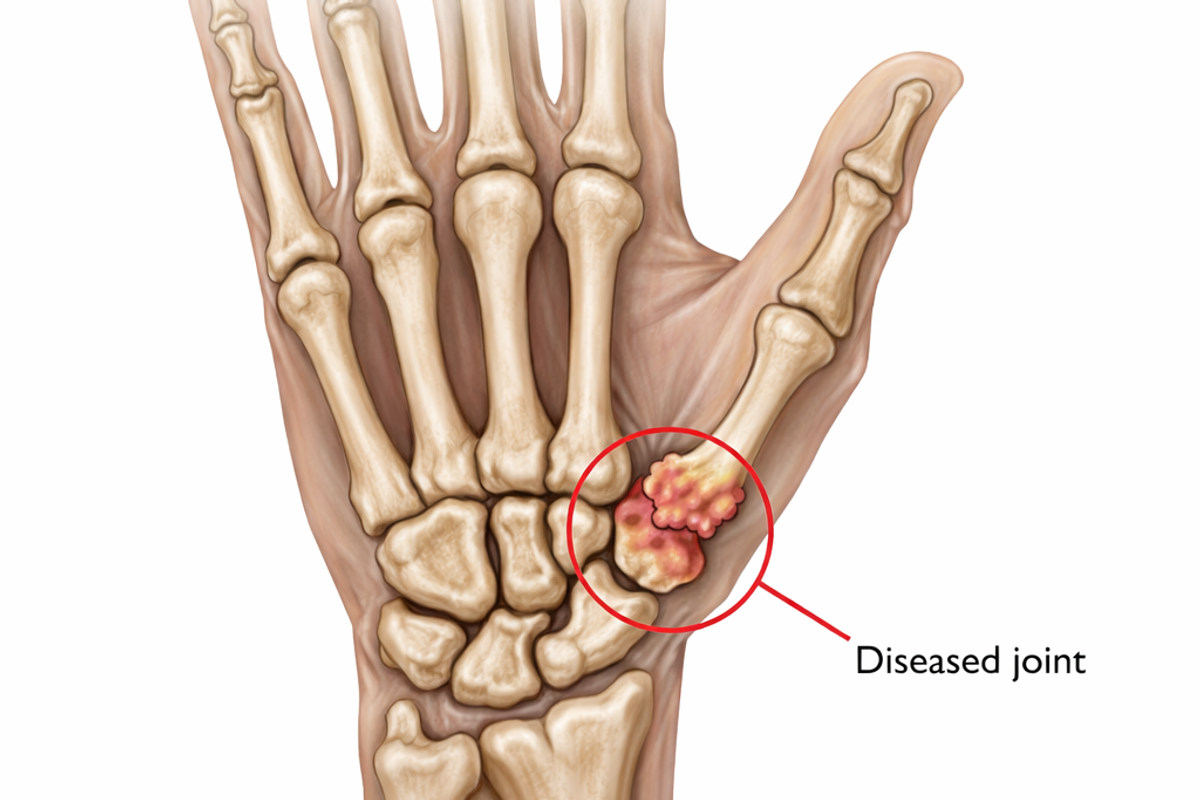
If opening jars, turning keys, or pinching small objects has become painful, you may be dealing with arthritis at the base of your thumb. The carpometacarpal (CMC) joint—where the thumb meets the wrist—is one of the most common locations for arthritis in the hand, particularly in women over 50.
As a hand surgeon in Phoenix, I see thumb basal joint arthritis almost daily. The good news is there are excellent treatment options at every stage of the disease.
What Is Thumb CMC Arthritis?
The CMC joint sits at the very base of your thumb, where the first metacarpal bone meets the trapezium bone in the wrist. This joint is shaped like two saddles interlocking, which gives the thumb its remarkable range of motion—but also makes it vulnerable to wear-and-tear arthritis. Over time, the cartilage cushioning this joint wears away, leading to bone-on-bone contact, pain, weakness, and eventually deformity.
Who Gets Thumb Arthritis?
- Women are 10–20 times more likely than men to develop symptomatic CMC arthritis
- Age over 50, though it can occur earlier after trauma
- Prior fracture or injury to the thumb or wrist
- Joint hypermobility (loose ligaments)
- Family history of arthritis
- Occupations or hobbies involving repetitive pinching and gripping
Symptoms
- Pain at the base of the thumb, worsened by pinching, gripping, or twisting
- Swelling and tenderness at the thumb base
- Weakness when pinching—difficulty opening jars, turning keys, or holding small objects
- A grinding sensation (crepitus) with thumb movement
- In advanced stages, a visible bump or deformity at the thumb base as the joint subluxes
Non-Surgical Treatment
Many patients manage well for years with conservative treatment:
Splinting
A thumb spica splint supports the CMC joint and reduces stress on the arthritic surfaces. Wearing it during aggravating activities or at night can significantly reduce pain.
Anti-Inflammatory Medications
Oral NSAIDs and topical anti-inflammatory creams can help manage flares.
Corticosteroid Injection
An injection of corticosteroid directly into the CMC joint can provide weeks to months of relief. This is both therapeutic and diagnostic—if the injection relieves your pain, it confirms the CMC joint as the source.
Activity Modification
Ergonomic tools, jar openers, key turners, and other adaptive devices can reduce stress on the joint during daily activities.
When Is Surgery Needed?
Surgery is considered when pain and functional limitation persist despite conservative measures. The most commonly performed and reliable procedure is:
Trapeziectomy with Ligament Reconstruction
This involves removing the trapezium bone (the worn-out arthritic bone) and reconstructing the supporting ligaments using a nearby tendon. This eliminates the bone-on-bone contact while maintaining thumb length and stability. The procedure has a long track record of excellent outcomes with high patient satisfaction.
Other options include CMC joint fusion (arthrodesis) for younger, high-demand patients, and various implant arthroplasties. I discuss all options and recommend the best approach based on your age, activity level, and disease severity.
Recovery After Thumb Arthritis Surgery
- Weeks 1–2: Splint or cast immobilization, keep hand elevated
- Weeks 2–6: Transition to a removable thumb spica splint, begin gentle motion with hand therapy
- Weeks 6–12: Progressive strengthening, gradual return to activities
- Months 3–6: Continued strength gains. Most patients report significant pain relief and improved function by 3 months, with full recovery by 6 months
Thumb Arthritis Care Across the Valley
If thumb pain is limiting your daily activities, you don't have to live with it. I provide comprehensive evaluation and treatment for thumb arthritis for patients across the Phoenix metro—Scottsdale, Mesa, Chandler, Gilbert, Fountain Hills, Peoria, Goodyear, and Buckeye.
Call (602) 258-4788 to book an appointment with Dr. Todd Richards. Most insurance plans accepted. Same-week appointments often available.