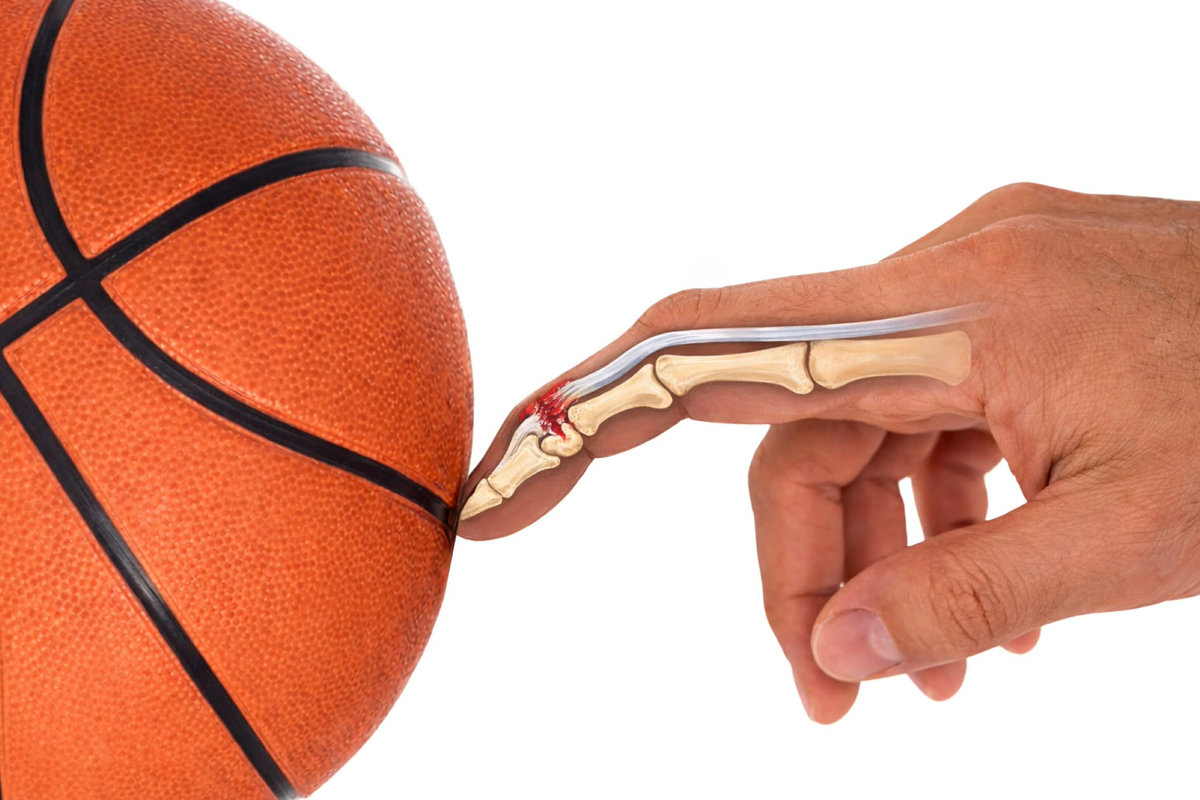
You jammed your finger catching a ball, making the bed, or reaching for something—and now the tip of your finger droops and you can’t straighten it on your own. This is a mallet finger, and it’s one of the most common tendon injuries in the hand.
What Is a Mallet Finger?
A mallet finger occurs when the extensor tendon that straightens the tip of your finger (the distal interphalangeal or DIP joint) is disrupted. This can happen as a pure tendon rupture (the tendon pulls off the bone) or as a bony mallet (a small piece of bone is pulled off with the tendon). Either way, the result is the same: the fingertip droops and you cannot actively straighten it, though you can push it straight with your other hand.
Causes
- A ball striking the extended fingertip (basketball, baseball, football, volleyball)—hence the nickname "baseball finger"
- Jamming the finger into bedding while making the bed
- Any forceful flexion of the fingertip while the finger is straight
- Minor trauma in older adults with weaker tendons
Symptoms
- Inability to straighten the fingertip—it droops at the last joint
- Pain and swelling at the DIP joint
- The fingertip can be passively straightened (pushed straight) but drops when released
Treatment: Splinting Is the Standard
The vast majority of mallet fingers—including most bony mallets—are treated non-surgically with full-time splinting of the DIP joint in extension (straight) for 6–8 weeks, followed by 2–4 weeks of nighttime splinting.
The critical rule: the DIP joint must remain straight at all times during the initial splinting period. Even one episode of the fingertip dropping restarts the clock. I fit patients with a custom or prefabricated DIP extension splint and teach proper skin care and splint hygiene to avoid complications.
When Is Surgery Needed?
Surgery for mallet finger is uncommon but may be considered when:
- A large bony fragment involves more than one-third of the joint surface and the joint is subluxed (shifted out of alignment)
- Splinting has failed after a full course of treatment
- The injury is chronic (old) and the finger has developed a swan neck deformity
Mallet Finger Care in Phoenix
If your fingertip is drooping after an injury, see a hand surgeon for proper evaluation and splinting. Early, correct treatment produces the best results. I see mallet finger patients from across the Phoenix metro—Scottsdale, Mesa, Chandler, Gilbert, and beyond.
Call (602) 258-4788 or visit toddrichardsmd.com to book an appointment with Dr. Todd Richards. Most insurance plans accepted. Same-week appointments often available.