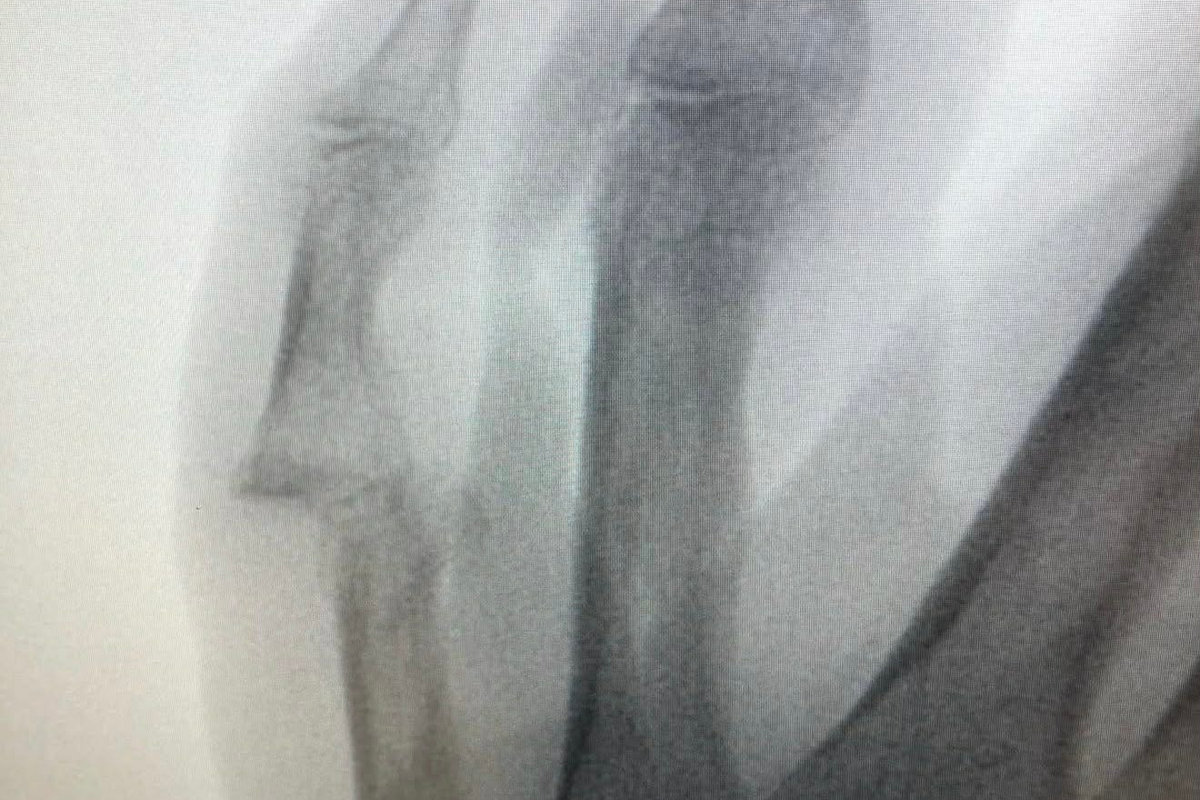
You jammed your finger during a game, a fall, or while doing yard work. It swelled up, maybe looked crooked for a moment, and someone "popped it back in." You buddy taped it and figured it would get better. But weeks later, the finger is still swollen, stiff, and unstable. This is one of the most common scenarios I see in my Phoenix practice—a dismissed finger dislocation that needed more attention from the start.
What Happens When a Finger Dislocates?
A finger dislocation occurs when the bones at a joint are forced out of their normal alignment. The PIP joint (middle joint) is the most commonly dislocated joint in the hand. During a dislocation, the joint capsule, collateral ligaments, and often the volar plate (a thick ligament on the palm side of the joint) are torn. The bone may also be fractured.
Dislocations are classified by the direction the finger displaces—dorsal (most common), lateral, or volar—each with different associated injuries and treatment implications.
Why "Just a Jammed Finger" Can Be a Problem
The term "jammed finger" is used casually for everything from a minor sprain to a dislocation with fracture. The danger is in assuming every jammed finger is minor. Injuries that are missed or undertreated can lead to:
- Chronic instability—the finger feels loose or gives way
- Stiffness—scar tissue forms and the joint loses motion
- Volar plate injury—can lead to a hyperextension deformity (swan neck)
- Missed fracture-dislocation—a fracture involving the joint surface that needs surgical fixation
When to See a Hand Surgeon
- The finger looked visibly deformed or crooked after the injury
- Significant swelling that persists beyond a few days
- Inability to fully bend or straighten the finger
- The finger feels unstable or "loose" at the joint
- Pain that doesn’t improve after 1–2 weeks of buddy taping
Treatment
SIMPLE DISLOCATIONS
If the joint is stable after reduction (putting it back in place) and X-rays show no fracture, treatment involves brief splinting followed by early protected motion with buddy taping. The key is starting motion early to prevent stiffness while protecting the healing ligaments.
COMPLEX DISLOCATIONS AND FRACTURE-DISLOCATIONS
Fracture-dislocations—where a piece of bone is broken off along with the ligament—often require surgery to restore joint congruity and stability. Volar dislocations may also require surgical repair of the central slip to prevent a boutonniere deformity.
Recovery
- Simple dislocations: Buddy taping for 3–6 weeks, full recovery in 2–3 months (some residual swelling can persist for 6–12 months—this is normal)
- Fracture-dislocations: 4–6 weeks of splinting or post-surgical protection, hand therapy, full recovery 3–6 months
Finger Injury Care in Phoenix
Don’t let a "jammed finger" become a long-term problem. Early evaluation by a hand surgeon ensures nothing is missed. I see finger dislocations and injuries for patients across the Phoenix metro—Scottsdale, Mesa, Chandler, Gilbert, Goodyear, Peoria, and Fountain Hills.
Call (602) 258-4788 or visit toddrichardsmd.com to book an appointment with Dr. Todd Richards. Most insurance plans accepted. Same-week appointments often available.