Hand and Finger Infections: Why Emergency Treatment from a Hand Surgeon Matters
- Todd Richards
- Feb 26
- 3 min read

Updated: Mar 7
A hand and finger infection are both a true hand emergency. What may start as a small cut, puncture wound, or animal bite can quickly become a serious surgical problem if not treated promptly. The hand’s complex anatomy—with tendons, tendon sheaths, joints, and tight compartments—means infections can spread rapidly and cause permanent damage to critical structures.
As a hand surgeon serving the Phoenix metro—including Peoria, Goodyear, Buckeye, and the West Valley—I treat hand infections urgently and want patients to understand when to seek immediate care.
Common Types of Hand and Finger Infections
Paronychia (Nail Infection)
An infection of the soft tissue around the fingernail, usually caused by a hangnail, nail biting, or a manicure. Early paronychia may respond to warm soaks and antibiotics, but once an abscess forms, it requires incision and drainage.

Felon (Fingertip Infection)
A deep infection of the fingertip pulp—the fleshy pad of the finger. Felons cause intense, throbbing pain and swelling in the fingertip. They always require surgical drainage because the fingertip has multiple small compartments (septa) that trap infection and prevent antibiotics from reaching it.
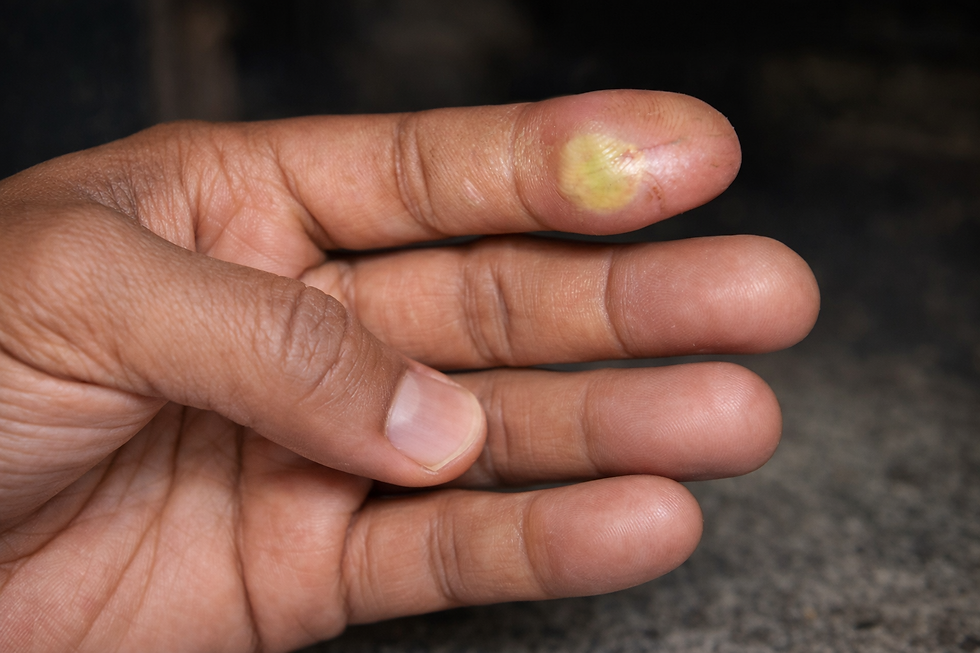
Flexor Tenosynovitis
This is the most dangerous common hand infection. Bacteria enter the tendon sheath (the tight tube that surrounds the flexor tendon) through a puncture wound, and infection spreads rapidly within this closed space. The classic signs are a uniformly swollen finger held in a slightly bent position, pain with any attempt to straighten the finger, and tenderness along the entire tendon sheath. This is a surgical emergency—delayed treatment can result in permanent tendon damage and a stiff, nonfunctional finger.

Deep Space Infections
The hand contains several deep compartments where infection can collect. These require surgical drainage, often in the operating room under anesthesia, to thoroughly irrigate and debride the infected tissue.

Bite Wounds
Animal bites (dogs, cats) and human bites (including "fight bite" injuries from punching someone in the mouth) are particularly dangerous. Cat bites are especially concerning because their sharp, thin teeth inoculate bacteria deep into joints and tendon sheaths. Human bite wounds over the knuckles can infect the joint. All bite wounds to the hand should be evaluated by a hand surgeon promptly.

Warning Signs: When to Seek Urgent Care
See a hand surgeon urgently if you have:
Increasing redness, swelling, and pain around a wound or cut on the hand
Red streaks extending from the wound up the hand or arm
Pus or drainage from a wound
Fever or chills along with a hand wound
A swollen, stiff finger that hurts to move—especially after a puncture wound
Any animal or human bite to the hand, even if it looks minor
How Are Hand Infections Treated?
Treatment depends on the type and severity of infection:
Antibiotics: Started immediately, often IV antibiotics initially for serious infections, transitioning to oral antibiotics
Surgical drainage: Required for all abscesses, felons, flexor tenosynovitis, deep space infections, and most bite wounds. This involves opening the infected area, draining the pus, irrigating thoroughly, and sometimes leaving the wound open to heal from the inside out
Wound care: Careful dressing changes and monitoring for healing
Hand therapy: After the infection clears, therapy helps restore motion and strength
The key is early, aggressive treatment. Hours matter with hand infections—particularly flexor tenosynovitis, where a delay of even 24 hours can mean the difference between a good outcome and permanent stiffness.
Frequently Asked Questions
Can I just take antibiotics for a hand infection?
Antibiotics alone are sufficient only for very early, superficial infections without abscess formation. Once pus has collected, antibiotics cannot penetrate the abscess—surgical drainage is required. Delaying surgery while hoping antibiotics will work often makes the outcome worse.
My cat bit my hand but it’s just a small puncture. Should I worry?
Yes. Cat bites are deceptively dangerous. The thin teeth inoculate bacteria (particularly Pasteurella) deep into tissue. Up to 30–50% of cat bites to the hand become infected. Seek evaluation within 24 hours.
How long does recovery take after surgery for a hand infection?
Recovery depends on the severity. Simple abscess drainage may heal in 1–2 weeks. More serious infections like flexor tenosynovitis may require weeks of wound care and months of hand therapy to regain full function.
Urgent Hand Infection Care Across the Valley
Hand infections don’t wait, and neither should you. Whether you’re in Peoria, Goodyear, Buckeye, Phoenix, Scottsdale, or anywhere in the Valley, call our office for urgent evaluation. Early treatment preserves hand function and prevents serious complications. ☎ Schedule Your Consultation
Call (602) 258-4788 or visit toddrichardsmd.com to book an appointment with Dr. Todd Richards. Most insurance plans accepted. Same-week appointments often available.


Comments